
Two years ago, I attended the Ontario Traffic Council’s Active Transportation Symposium, a bi-annual gathering of Ontario practitioners to discuss the most pressing topics in the field. The agenda included protected intersections (including from yours truly), e-bikes, e-scooters, micro-cars, universal accessibility, and pedestrian crossovers, or PXO’s.
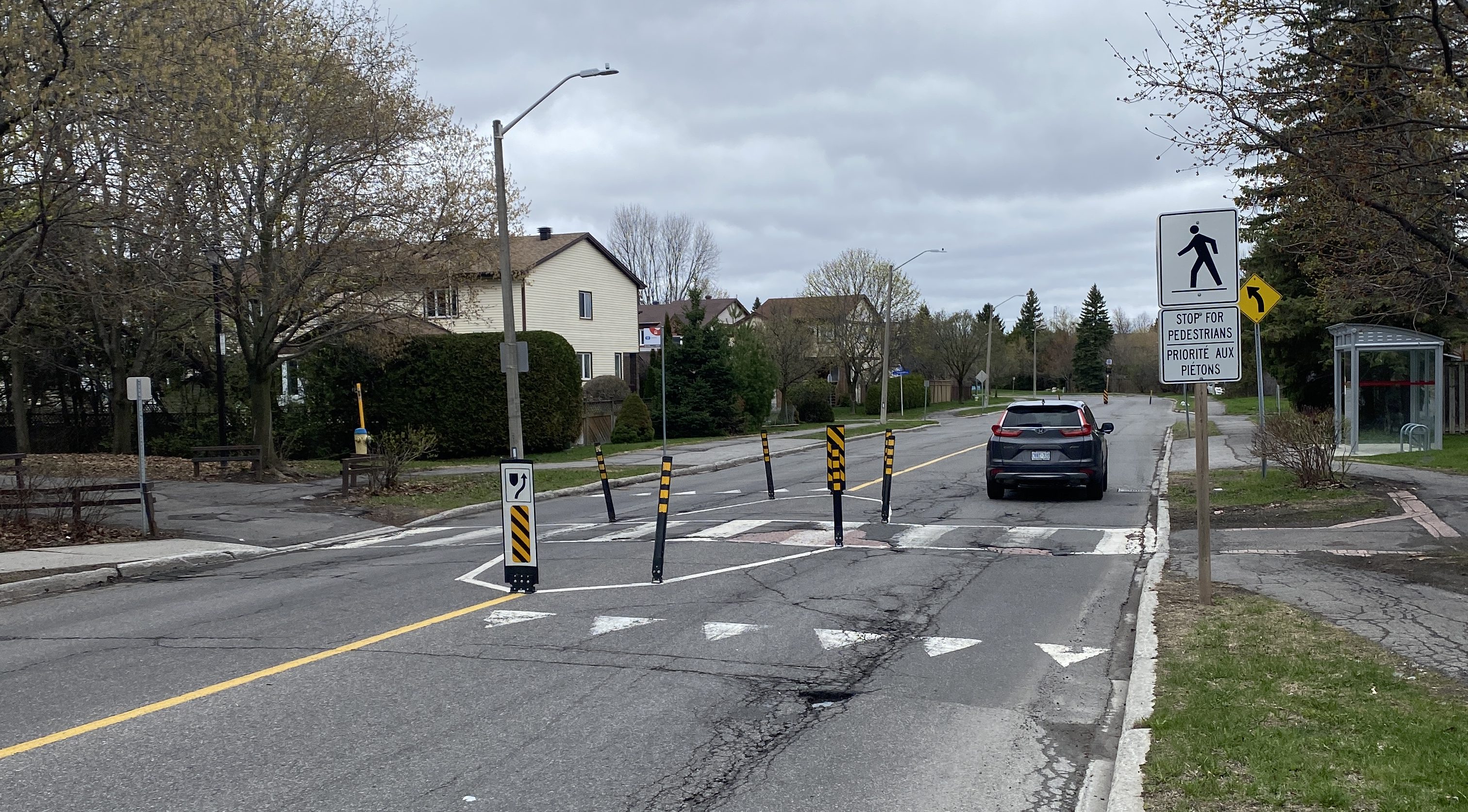
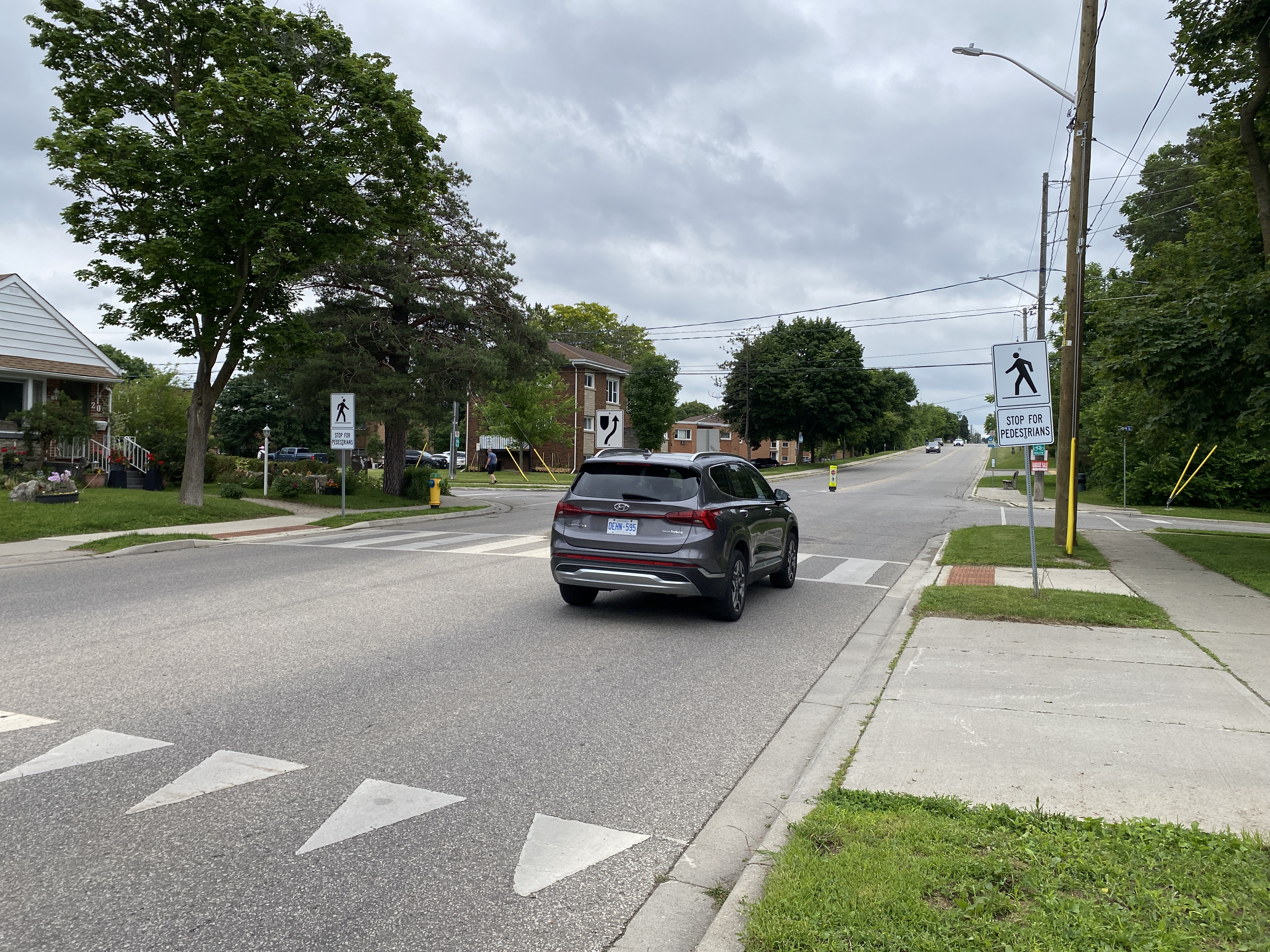
PXO’s are pedestrian priority crossings that are not signalized. They have the familiar “zebra” crosswalk markings but instead of drivers facing a red light, they’re presented with signage instructing them to yield to pedestrians and in some cases, flashing yellow squares (called rapid rectangular flashing beacons or RRFB’s). They’re an excellent tool to make communities more walkable at a much lower cost than providing a traffic signal (which cost $250,000 or more). While they’ve been in use across Canada for many years, they’ve only been permitted in Ontario since 2014 so their adoption is still relatively new.
The discussion featured a panel of practitioners from City of Vaughan, City of Ottawa, and City of Mississauga. Here’s a brief summary of what was discussed along with my thoughts.
Vastly different rollouts
While Vaughan had installed just five in 2024, Mississauga was at a few dozen, and Ottawa had 210 active PXO’s and another 70 awaiting funding, demonstrating the huge range of effort that municipalities have put to these. Mississauga’s City Council didn’t even approve their use until 2018, four years after they were first introduced to Ontario. Notably, the City of Toronto has taken an event different approach, in choosing not to adopt the modern RRFB flashers but instead keep its standard as the overhead yellow boxes with the flashing lights that they’ve been using for years.
Funding seems to be the main factor holding up a broader implementation, which I more acutely diagnose as a lack of political will. Despite being very cheap to implement, elected officials are electing to put transportation budgets to other projects.
Another takeaway for me was how municipalities pick which sites to install them with the limited funds they have. Mostly these seem to be picked based on requests from the public or councillors, which in my mind is a real risk for equity. We know that equity-deserving communities have less resources and time to advocate for improvements in their neighbourhood, and if that’s the main way municipalities are picking where to install them, then we’re likely just engineering more inequity into our communities.
Where are they applicable?
Ontario Traffic Manual (OTM) Book 15 provides the guidance for the design of PXO’s, and while the guide does allow these on roads with four lanes or more in limited cases, the consensus seems to generally be that PXO’s are most useful on roads with just one lane in each direction. While most local streets carry low enough volumes that they can basically be crossed anywhere, collector roads are typically busy enough that pedestrians of all ages and abilities aren’t comfortable crossing without drivers stopping for them (remember, we’re designing for the 8-year-old walking to school independently, not your confident adult commuter used to dodging traffic).

We saw that Ottawa has applied some PXO’s on arterial roads but those were just roads with one travel lane in each direction. All three staff discussed that they’re moving to install them at pedestrian crossings at roundabouts as well as at right turn channels at intersections, to make the expectations for drivers more consistent.
The issue of compliance

There seems to be a much less consistent experience on how compliant drivers are at PXO’s, and what to do about this issue. While Ottawa mentioned having just a small subset of PXOs with compliance issues, Vaughan seems to be having challenges at all of them. The Vaughan staff showed a video of a person standing waiting to cross for two minutes before a driver actually stopped.
Sightlines were discussed, and there have been issues where approaching drivers aren’t given enough clear sight distance to see pedestrians, resulting in adjustments to on-street parking or trimming of trees. Mississauga has smartly integrated PXO’s with its traffic calming program, so a PXO install can be paired with traffic calming, and a traffic calming project can include PXO’s. The staff showed a lovely example of a raised crosswalk that clearly works to slow drivers and encourage yielding.
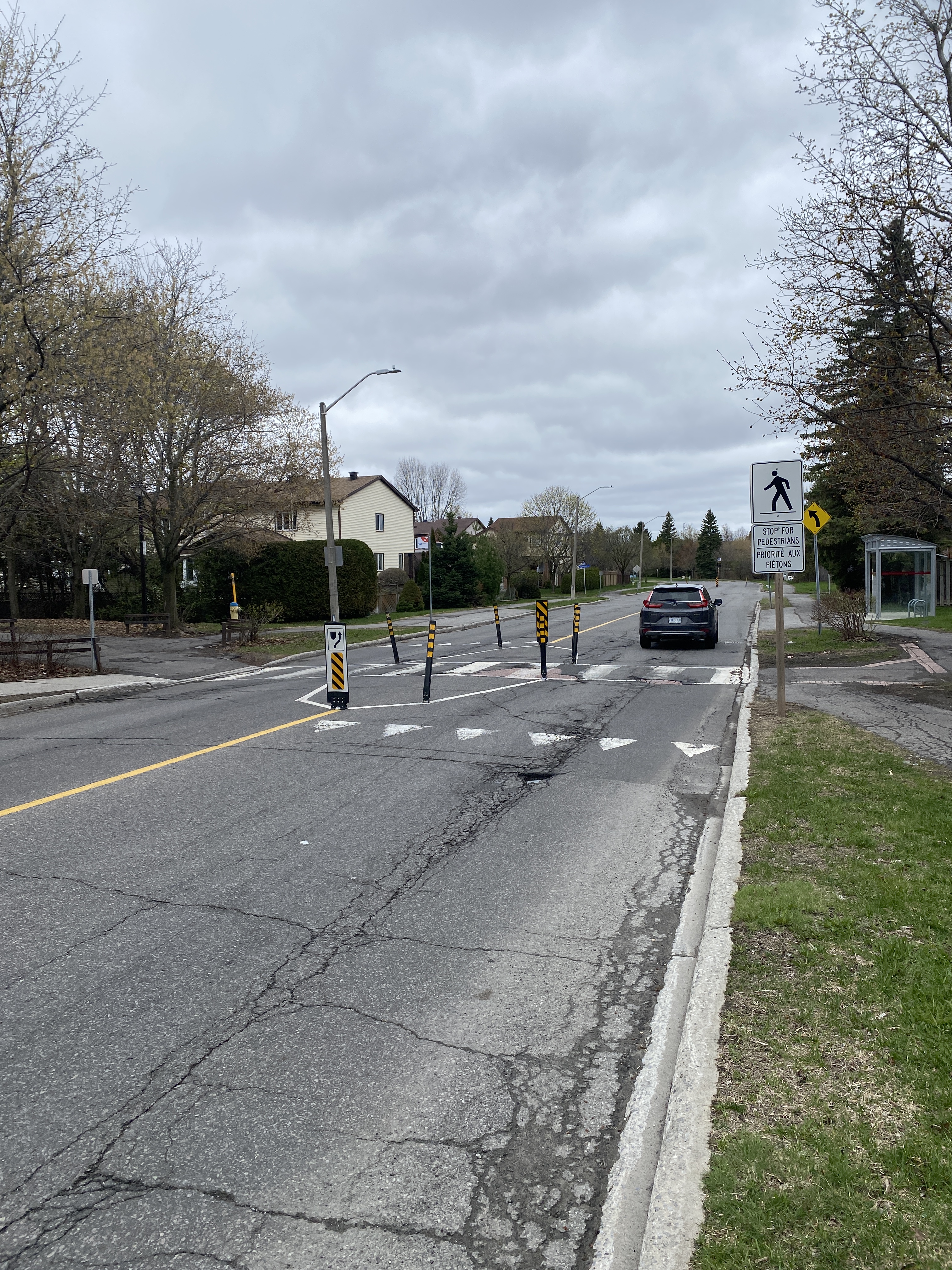
The City of Ottawa’s assessment process for PXO’s looked quite rigorous and includes safety reviews and looking at things like whether the existing lighting is sufficient. In at least one case in my neighbourhood in Ottawa, the City has used used its temporary traffic calming program to add a median island at a PXO and I can report that it makes the crossing more comfortable (image below).
In the case of Vaughan, I do wonder how much of the noncompliance is actually just because they’ve been so limited in their implementation. PXO’s are a new thing for drivers and if you don’t regularly encounter them, you’re not likely to understand or respect them. I compare this to my experience using pedestrian crossings in Atlantic Canada (and Western Canada) where drivers will stop even if they suspect you might be about to use the crosswalk. It’s a difference in driving culture.
By default or by warrant?
The wording in OTM Book 15 allows PXO’s to be justified on the basis of connectivity, meaning practitioners have the option to proactively plan for them, for example as part of a trail through a residential neighbourhood. There was some good audience discussion on whether PXO’s should be proactively included and in what contexts; someone mentioned that city transportation master plans should include a comprehensive assessment of PXO locations and seek to make them commonplace.
One shortcoming of existing guidance is OTM Book 15’s insistence that PXO’s, like signals, be installed at least 200 metres from another controlled crossing. Research by ITE and NACTO strongly suggests that walkable pedestrian environments should have crossings every 100 metres or less, and arbitrarily limiting PXO’s like this can disqualify locations that are otherwise really good candidates for them.
What about bikes?
This may be the single most controversial issue on PXO’s. Particularly when a PXO is added to a trail crossing, cyclists commonly use PXO’s, and Ontario’s Highly Traffic Act currently prohibits cycling in a crosswalk. This creates a challenging situation for practitioners: legally, cyclists must dismount, but in practice most people cycle through. There was discussion of piloting a “BXO” (bicycle crossover) in an Ontario municipality to start building a case for the provincial government to change the regulation, and since then piloting this has become a formal initiative of the OTC.
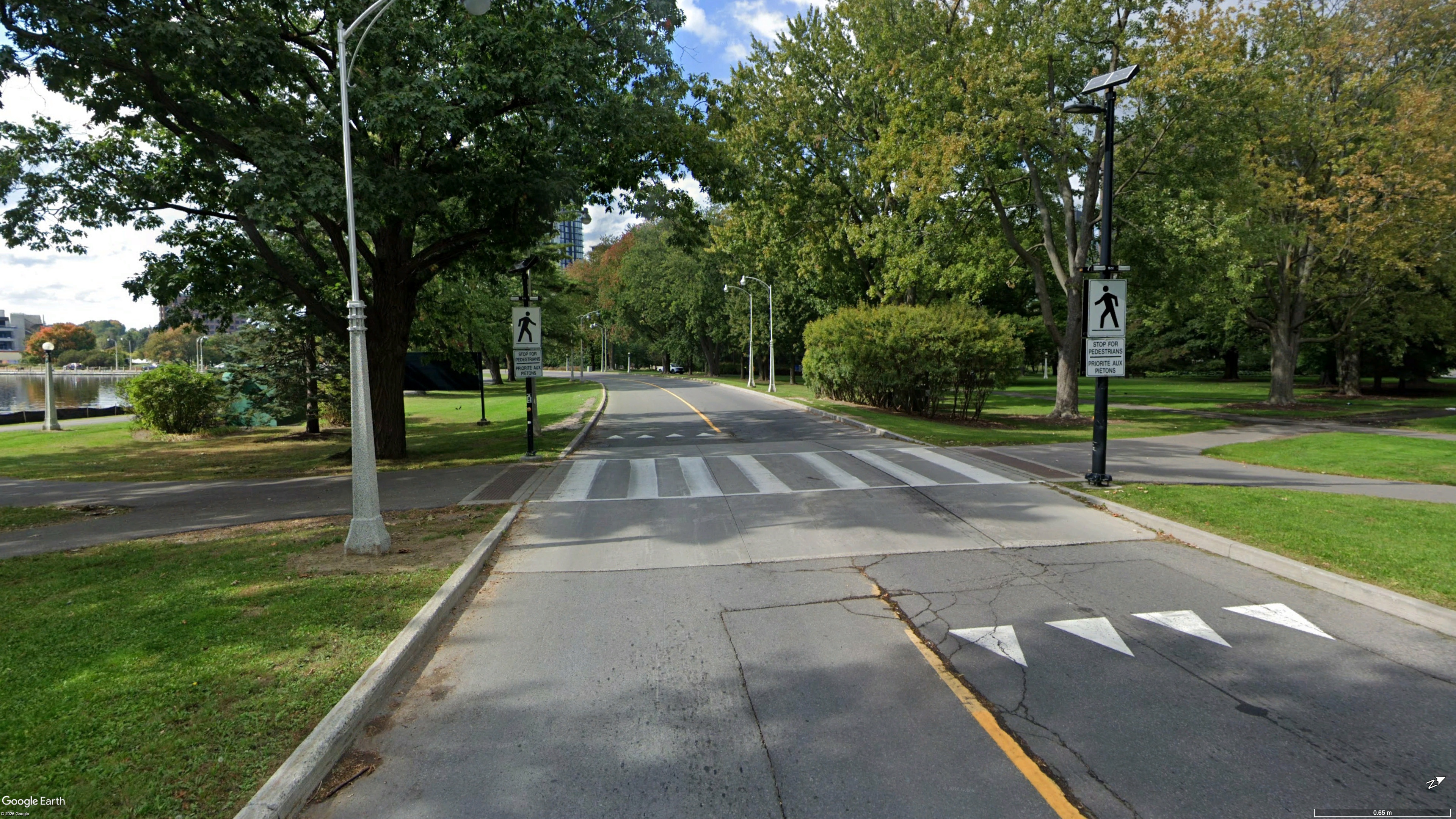
This author’s experience is that in most cases, allowing cyclist riding through PXO’s is absolutely fine, but because of the legal framework, things could get hairy quickly if a cyclist were to be hit by a motorist while cycling in one. I’m inspired by some excellent work being done by City of Edmonton staff to study how to improve the cycling experience at these crossings and facilitate them riding through legally.
My conclusions
Though adoption rates have been mixed, I think there’s a strong future for PXO’s in Ontario. They’re the ideal tool for improving pedestrian crossings on two-lane streets because they are much cheaper and impact traffic much less than signals. That said, while driver yielding is quite good at speeds up to 30-40 km/h, above these speeds we need to make a more concerted effort to add traffic calming to reduce driver speeds at the point of conflict to improve safety and compliance. Simply installing a PXO without changing the road geometry risks creating precarious situations with poor yielding. While the allowance of bikes is a sticky legal issue, I’m confident that we’ll figure out the legal bits soon enough, with early pilot project experience showing promise.
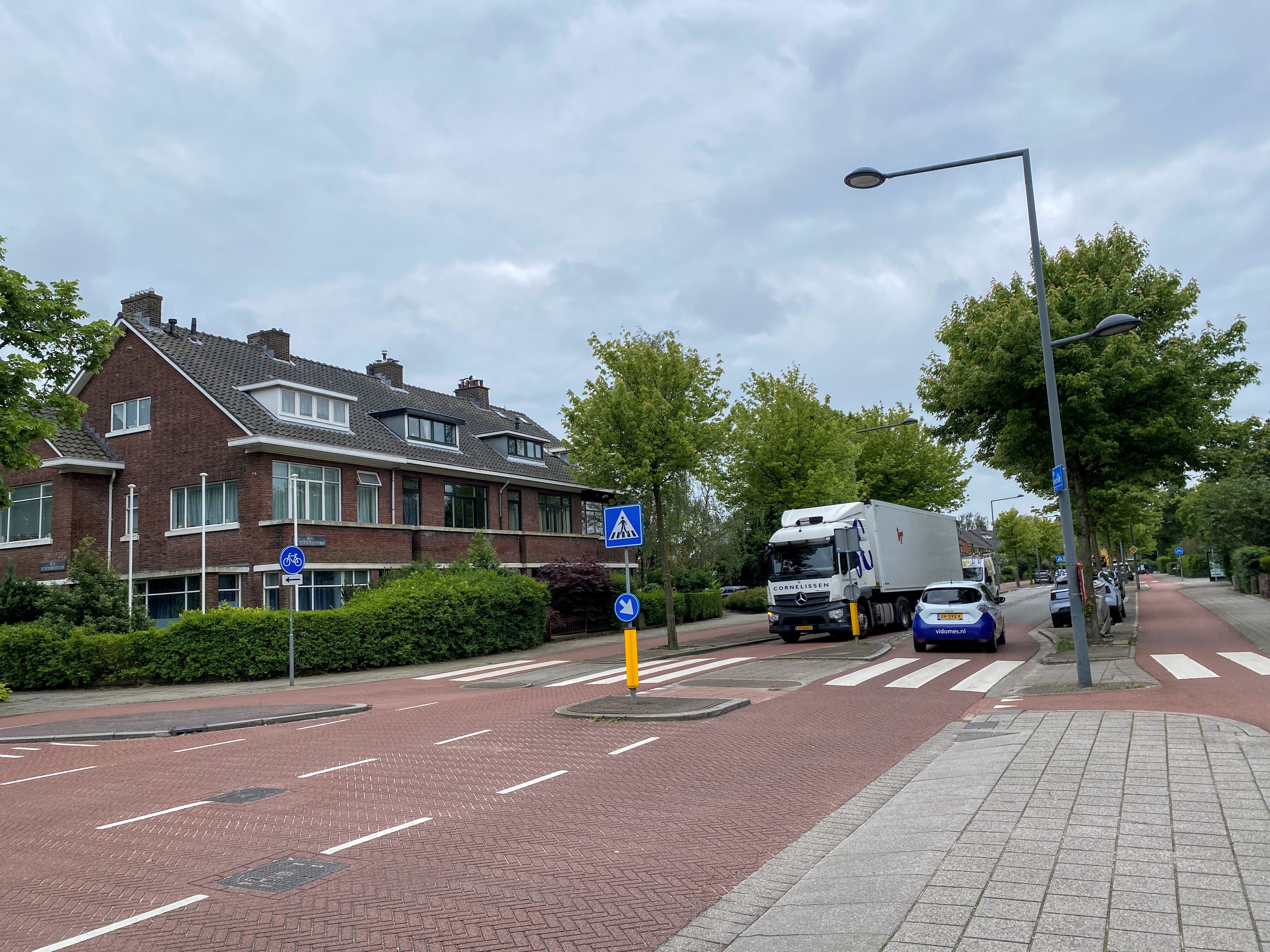
In closing, here’s a picture of a crosswalk in the Netherlands with almost all of the “ideal” features: traffic calming with surface treatment and lateral deflection, a refuge island, good lighting, and a place for people cycling to legally cross adjacent to the crosswalk (without priority). We can do it here too!


PXOs are pretty bad as a pedestrian, in practice. Drivers operate their vehicles through muscle memory. They have a deeply-ingrained stimulus-response reaction to amber and red lights, honed after tens of thousands of repetitions.
Why introduce a completely different stimulus? In my experience, drivers respond to PXOs a lot like when a pedestrian randomly crosses in the middle of the road, minus the honking. Not once I have seen a driver stop at the designated X road marking, either.
The gap between the theoretical properties of these crossings and real-world human psychology is massive. I have not seen any of these issues with traffic lights with beg buttons. My pet peeve with those is that instead of instantly turning amber when you press the buttom, they sometimes make you wait for a couple of minutes even if there is zero vehicle traffic. Why not apply the cool down timer *after* turning green for pedestrians? Because I am assuming that the waiting period is due to some cool down timer to throttle how much pedestrians are allowed to live their lives.
LikeLike
I have had the opposite experience. I find that drivers give way to the pedestrians at least 80% of the time. But I attribute that to a few things,
1. The road speed and design, narrow lanes, slow moving around 40km/h and a centre island.
2. The type of PXO matters, the ones with flashing lights work well.
3. Consistency in an area or along a corridor. The more that are installed, say in one specific neighborhood or multiple along one road, it makes the PXO treatment expected more intuitive for drivers to yield to pedestrians at PXOs.
It does take time for drivers to get used to new infrastructure. But it is not as deeply engrained as you feel. It is not a reason to discredit a good solution because drivers need to learn something new. However, I do agree for faster and wider roads need signals to have an effective crossing.
LikeLike
In my opinion, an 80% compliance rate means there is a 20% life-critical rule violation. And seeing it as an acceptable status-quo is simply the normalization of deviance. It is simply not good enough when lives are lost every year at a rate that surpasses all other violent crimes combined.
LikeLike
The important distinction is the speed at which that 20% non yielding rate is happening. At 60km/h it is deadly. At 30 km/h with traffic calming, a mistake (or noncompliance) is unlikely to kill or severely injure someone. And of course at 30 km/h you get higher yielding rates anyway. It all comes back to speed.
LikeLike
I share your frustration about the delay for pedestrians at pedestrian signals. It is very much a choice of the local jurisdiction – when I go to Kingston I’m amazed (and delighted) that the light changes right away when I press the button.
LikeLike